
The 2026 Strait of Hormuz Crisis and Its Impact on Global Shipping Costs for Charcoal Briquettes
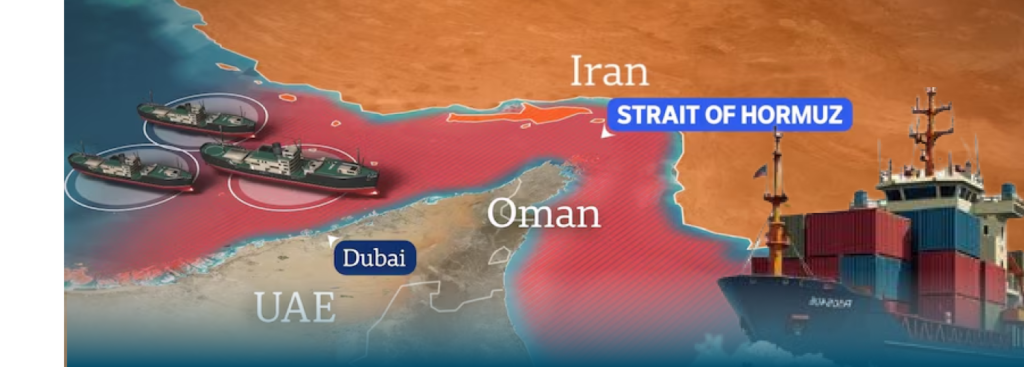
The disruption at the Strait of Hormuz since February 2026 is not just an energy supply shock it has fundamentally restructured global logistics costs, including the charcoal briquette shipping cost 2026 across key export markets.
Author: Rajwa Alvaro, Founder and Managing Director
Designed By: Taqy Farras, Head Of Digital Marketing
Published: April 2026
Sources: UNCTAD, BCG, UN News
Estimated reading time: ~5 minutes
What Happened at the Strait of Hormuz?
Since late February 2026, the Strait of Hormuz the maritime chokepoint connecting the Persian Gulf to the Indian Ocean has experienced one of the most significant disruptions in modern trade.
Escalating conflict between the US–Israel coalition and Iran triggered attacks on commercial vessels, leading to a sharp decline in traffic and widespread rerouting of global shipping flows.
Major carriers such as Maersk, CMA CGM, and Hapag-Lloyd temporarily suspended transits through the strait. At the same time, renewed security risks in the Red Sea further disrupted normal routes via the Suez Canal.
As a result, many vessels have been forced to reroute via the Cape of Good Hope adding approximately 10–14 days to transit times and increasing fuel consumption per voyage.
Why This Is More Than an Energy Problem?
This crisis is often interpreted as an oil supply issue. In reality, its impact is structural and extends across the entire global logistics system.
Shipping networks share common infrastructure vessels, port capacity, and insurance systems across all cargo types. When disruption occurs, costs increase across the board.
“Fuel prices rose sharply following the February 28 escalation and remain elevated, with shipping and insurance costs also rising significantly feeding through supply chains and raising the cost of producing and distributing goods across the world.”
– UNCTAD Rapid Assessment, April 2026
War-risk insurance premiums in Gulf-adjacent routes have increased significantly, in some cases reaching multiple times their normal levels. These costs are passed directly to cargo owners through freight surcharges.
For exporters, this reinforces the ongoing freight Indonesia to Middle East cost increase observed since early 2026.
Charcoal Briquette Shipping Cost 2026: What Changed?
The current disruption has reshaped cost structures across the charcoal export industry. Three primary cost drivers explain this shift:
1. Bunker Surcharges
Rising marine fuel prices have led carriers to apply higher bunker adjustment factors (BAF), directly impacting the charcoal briquette shipping cost 2026.
2. Vessel Capacity Constraints
Rerouting vessels via longer routes reduces available capacity across global shipping lanes, tightening booking availability and increasing rates.
3. Insurance and Risk Premiums
Higher war-risk insurance costs are now embedded into freight pricing, especially for shipments connected to Gulf-region trade routes.
As a result, the overall bbq charcoal export logistics cost has become significantly more volatile compared to pre-crisis conditions.
Freight Market Reality for Charcoal Exporters
While exact freight rates vary depending on route, carrier agreements, and shipment volume, exporters across Southeast Asia have reported noticeable cost escalation since March 2026.
The freight Indonesia to Middle East cost increase has been particularly impactful for routes serving major ports such as Jebel Ali and Dammam.
In addition, longer transit times have introduced new operational challenges, including:
- Increased inventory holding requirements
- Higher working capital exposure
- Greater uncertainty in delivery timelines
Current Status: Ceasefire, But Not Yet Normal
A temporary US – Iran ceasefire has been extended as of late April 2026. However, logistics conditions have not yet returned to normal.
Logistics recovery typically lags behind diplomatic developments:
- Vessel schedules require time to stabilize
- Insurance premiums remain elevated
- Port congestion persists
- Security advisories are still active
- Freight markets continue pricing in uncertainty
In practical terms, normalization in shipping conditions may take significantly longer than the duration of the ceasefire itself.
Impact on Global Trade: UNCTAD Outlook
According to UNCTAD projections:
- Global merchandise trade growth is expected to slow significantly in 2026
- Global economic growth is also projected to moderate
The impact is uneven. Developing economies particularly across South and Southeast Asia — face compounded pressure from rising energy costs, currency volatility, and tightening financial conditions.
Why Charcoal Briquette Trade Is Not Immune?
Coconut charcoal briquettes widely exported from Indonesia to the Middle East, Europe, and the United States are directly affected through systemic logistics channels.
Key transmission mechanisms include:
- Fuel-driven freight adjustments (BAF)
- Reduced vessel availability due to rerouting
- Extended transit times affecting buyer planning cycles
This reinforces a critical shift: logistics is no longer just a supporting function, but a core cost driver in the charcoal export business.
What Industry Participants Should Monitor?
To navigate current conditions, exporters and buyers should focus on:
- Freight rate monitoring
Shipping costs are dynamic and require frequent updates - Inventory strategy adjustments
Safety stock levels should reflect increased transit uncertainty - Contractual risk awareness
Review exposure to surcharges, delays, and force majeure clauses - Geopolitical developments
Freight normalization depends on sustained regional stability
Conclusion
The 2026 Strait of Hormuz disruption represents a structural shift in global logistics, not a temporary anomaly.
For charcoal exporters, competitiveness is no longer determined solely by production efficiency. The ability to manage freight volatility, maintain delivery reliability, and navigate uncertainty has become equally critical.
About BumiCharcoal
BumiCharcoal is an Indonesian coconut charcoal briquette supplier based in Jakarta, Indonesia. The company focuses on reliable supply, consistent quality, and transparent pricing, supported by strong supplier relationships and clear communication with buyers.
Through ongoing analysis of global trade and logistics developments, BumiCharcoal provides not only product supply, but also practical market insight for more predictable sourcing decisions.
This article is published for informational and industry education purposes.
Website: www.bumicharcoal.com
Email: export@bumicharcoal.com
Hi, this is a comment.
I really appreciate you taking the time to read my post. If you enjoyed it, leave a comment and let’s chat!Gravatar.